
Introduction
February 27, 2026 | Originally Published: July 2021
Performance marketing has always been about accountability: paying for results, not promises. But today, the expectation around what constitutes “good results” looks different for each advertiser.
Consumers no longer move through clean, linear funnels. AI-powered search tools, voice assistants, comparison engines, and automated recommendations now shape buying decisions long before a brand ever sees a click or a form fill. At the same time, form fatigue is rising, attribution is getting noisier, and marketers are under increasing pressure to connect spend to real business outcomes.
In this environment, one signal continues to stand out: the inbound phone call.
Inbound calls represent a moment of intent. When a consumer picks up the phone, they are typically past the research phase and actively seeking help, answers, or a decision. For service-based businesses in particular, the call has become one of the most reliable indicators of purchase readiness.
“As performance marketing matures, brands are prioritizing channels that deliver end-to-end attribution and measurable ROI. Pay-per-call stands out because it connects marketing investment directly to high-intent consumer interactions and trackable results.” - Dan Gallagher, Soleo CEO
Pay-per-call is a performance marketing model where advertisers pay for qualified inbound phone calls that meet predefined criteria. Historically, qualification relied heavily on call duration. Today, advances in call tracking technology, AI-driven routing, transcription, and real-time analytics allow advertisers to evaluate calls based on intent signals, conversation outcomes, and post-call performance.
In this guide, we’ll explore how pay-per-call works in today’s performance marketing landscape. We will introduce you to some basic principles, highlight key benefits, illustrate successful industries, and demonstrate what it takes to run scalable, compliant, and conversion-focused pay-per-call campaigns.
Whether you’re evaluating pay-per-call for the first time or looking to modernize an existing program, this guide is designed to help you make smarter, more confident decisions.
Table of Contents
Introduction to Pay-per-call
How pay-per-call works
Where do calls come from?
The do’s and don’ts of pay-per-call
How much does a call cost?
Compliance and pay-per-call
Why Choose Pay-per-call
Top benefits of pay-per-call
Pay-per-call compared to other performance marketing models
Pay-per-call results
Getting Started with Pay-per-call
Decide how you will receive calls
Decide how to structure your campaign
Choose your pay-per-call partner
How to Manage Your Campaign
Evaluating call sources
Managing your partner
Why CallThread
How Pay-Per-Call Works
With pay-per-call, advertisers pay for each qualified inbound phone call they receive from a third-party. These call sources can be publishers, affiliates, networks, and other lead-generators. A call is considered qualified if it meets the advertiser’s requirements and fulfills a predetermined duration requirement.
You manage your own pay-per-call campaign by setting a variety of parameters. These include:
- Bid – Set the price you are willing to pay for a call that lasts a specified duration (a typical call duration is between 90-180 seconds but varies by industry, category and time of year). Work with a pay-per-call partner who knows what a competitive offer in your category looks like to ensure your bid will perform well against your competition.
- Business hours – Establish the hours you are available to receive calls. Your pay-per-call partner will only send you calls during these hours. Sometimes, you can adjust your bid based on time of day.
- Business category – Define the specific services you offer (HVAC repair, bed bug fumigation, debt consolidation). A good pay-per-call partner will use ad targeting and other qualifying techniques such as Interactive Voice Recording (IVR) or AI agent qualification to drive calls that match your specific business category.
- Target consumer – Specify the kinds of buyers you want (new customers, homeowners, people over the age of 65). A good pay-per-call partner will be able to drive calls that fit narrower profiles within your business category, and they will use intent signals and call scoring to optimize your campaign for more calls that match your target consumer.
- Serviceable geographies – Identify the states or area codes your business services or that you want to target. Your pay-per-call partner will weed out any leads calling from outside your set geographies.
- Call pacing – Limit the number of calls you want to receive in a month, day, or hour. Your partner will not send you more calls than you are able to handle for that period.
Your pay-per-call partner may offer options for you to create a static bid, which operates based on the above static parameters you set, or a dynamic offer, which allows for dynamic bidding based on geography, time of day, or call source. The right kind of bidding for you will depend on your business category, ideal target consumer, and your pay-per-call goals, and a experienced partner will be able to recommend the right strategy for you.
The Top Industries for Pay-Per-Call
The industries that see the best return on investment with pay-per-call are service-based businesses that require a phone call at some point in the sales cycle, either to answer a prospect’s questions or to make a sale or schedule an appointment.
These industries perform well because the consumer needs help making the right decision (like in auto insurance), they have an urgent need for immediate service (like with pest control services), or they prefer human confirmation before committing (like with health insurance).
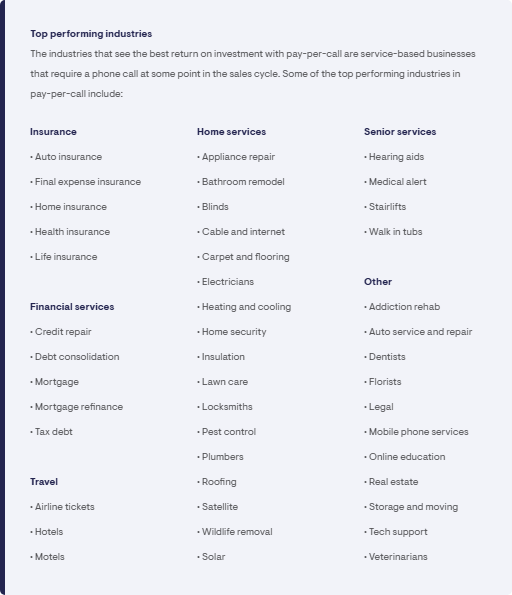
Some of the top performing industries in pay-per-call include:
Insurance Services and Pay-Per-Call
Businesses that sell insurance services are an excellent fit for a pay-per-call campaign. For example, we have seen partners succeed in P&C Insurance like auto, home, and bundled insurance as well as Health, Life, Medicare, and Final Expense Insurance.
There are a few reasons that the insurance services industry is ideal for pay-per-call. First is that there is usually a phone call somewhere in the sales cycle for insurance products. Second is that because insurance products are big, personalized, and often complex purchases, consumers sometimes prefer to talk to a live agent to be sure they’re making the right choices. Finally, insurance shoppers are likely to do their own research and compare multiple companies before they make a purchase, meaning they are likely to use third-party publishers to research their options and are more likely to make a phone call when they’re ready to buy.
Home Services and Pay-Per-Call
Home services businesses that benefit from pay-per-call include pest control, home security, appliance repair, HVAC, windows, roofing, carpet and flooring, and more.
Home services businesses benefit from pay-per-call in part because of urgency. A consumer who has a pest problem or an HVAC issue in the summer wants to be serviced right away, and will call to get their service scheduled ASAP. Additionally, most home services businesses still require a phone call for their quote and scheduling process; online scheduling is not necessarily the norm in this industry. For these reasons, pay-per-call is a good fit for home services.
How Pay-Per-Call Works
Here’s how a basic pay-per-call campaign works:
- Define: You begin by defining the details of your offer with your pay-per-call partner (either a pay-per-call network or direct with a variety of affiliates).
- Produce: Based on the guidelines of your offer, your pay-per-call partner will generate calls in your category, typically by advertising a tracking number. The tracking number will be used to identify them as the source and will automatically forward the call to your business or to a designated call center.
- Route: An AI agent, IVR, or dynamic call routing filters the calls. When a call matches your campaign requirements, the caller is seamlessly connected to your established business line.
- Invest: When the call reaches the predetermined duration, it becomes billable, and you pay your partner your agreed upon bid price.
- Optimize: Your partner will use call recordings, transcriptions, or call scoring to determine how well calls convert. If you provide conversion data, they can use that as well to optimize your campaign, prioritizing the best call sources, locations, and times.
Where do calls come from?
Affiliates, publishers, and networks use a variety of different methods to promote their tracking number and generate inbound calls including:
- Online – These channels include owned and operated websites (SEO/GEO), SEM, social media, programmatic, display advertising, voice assistants, conversational interfaces, and other lead-generation techniques that use the internet
- Offline – These channels include print, radio, television, outdoor advertising and direct mail
- Carrier traffic – Including voice search calls, directory assistance calls, and intercept traffic that come from calls to businesses no longer in service
With most inbound calls, the consumer finds the tracking number through the above channels, chooses to call, and then is connected to the advertiser’s line directly.
However, some pay-per-call providers offer transfer calls as well. Transfer calls can be inbound (the consumer calls the third-party call center which qualifies the call before transferring it to the advertiser’s business) or outbound (the third-party call center reaches out to the consumer via SMS or by phone, typically after the consumer fills out a lead-gen form). TCPA and other national laws and regulations restrict how these calls are managed, so it’s best to avoid them unless you have a deep understanding of how to handle this traffic best.
Additionally, some pay-per-call providers use an adaptive AI agent to qualify inbound calls before connecting them to the right buyer. This often provides a smoother consumer experience and allows for better call routing. This type of qualification is not considered a transfer.
The Do’s and Don’ts of Pay-Per-Call
When you first get started with pay-per-call, it can be difficult to know which practices will protect your brand, which will improve performance, and which introduce unnecessary risk. While the fundamentals of pay-per-call remain the same, the way campaigns are managed has evolved significantly with advances in call tracking, automation, and AI-driven quality assurance.
The following best practices are designed to help you build a pay-per-call program that is scalable, compliant, and focused on outcomes – not just call volume.
| Do | Don't |
|---|---|
| Remain compliant with TSR, TCPA and CCPA restrictions | Accept calls from unknown or opaque sources |
| Use duration as a baseline filter, not the sole quality metric | Rely on volume as a proxy for quality |
| Establish a clear creative approval and oversight process | Allow incentivized or misleading traffic |
| Define and enforce channel and traffic restrictions | Compete against your own internal marketing efforts |
| Monitor call quality continuously—not periodically | Ignore post-call performance data |
| Actively manage and optimize your campaign | Assume automation replaces oversight |
Today, successful pay-per-call programs are defined less by rigid rules and more by adaptive controls. Advertisers that treat pay-per-call as a system that learns from real outcomes and adjusts in real time consistently see stronger performance, lower risk, and higher return on ad spend.
How much does a call cost?
Price per call is influenced by several factors and can fluctuate depending on your industry, desired billable duration and quality requirements, competition in the pay-per-call space, and the time of year.
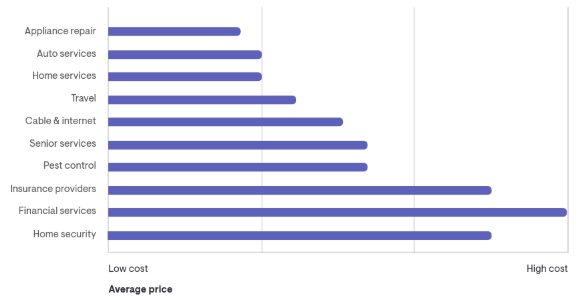
In general, the higher the average cost of your service to the consumer, the more the call will cost you. For example, a call for appliance repair is cheaper than a call for auto insurance because one-time appliance repair service is less expensive than long-term auto insurance.
But there’s a few other reasons appliance repair calls are less expensive than auto insurance calls. One reason is there’s more auto insurance businesses willing to pay a premium for calls than appliance repair businesses, and the competition drives a higher price. You can expect your prices to fluctuate based on the competition in your sector as well.
Another reason is that auto insurance providers often have more targeting parameters around what they consider a “quality” call, such as only wanting calls from drivers who currently have insurance. The more qualified you want your calls to be before they get to you, typically the higher your bid will need to be.
The price of your calls will also be impacted by your desired duration, which should be the amount of time you need to qualify the call on your end before you are charged. A 90-second duration generally costs less than a 120-second duration.
Finally, once your campaign is running, you may have the opportunity to adjust your bid (either dynamically or manually) based on your conversion rates. As you optimize your campaign based on the outcomes of your calls, you may need to adjust your bid to fit the kind of calls you wish to attract.
The graph on this page demonstrates the range of prices for several business categories based on data compiled over the last three years.
Sample of average prices by industry
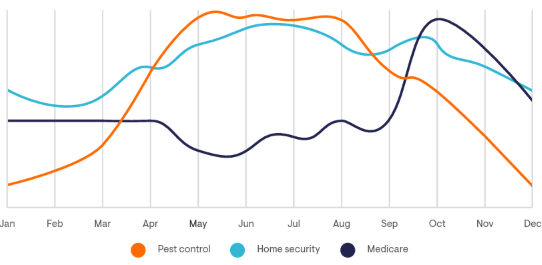
Many industries are also impacted by seasonality. A simple rule of thumb: performance marketing follows the rhythm of the category. In other words, if your business has a busy season, chances are that will be when your performance marketing campaigns will see the most volume as well. You can see this every year in categories from the obviously seasonal pest control and HVAC to the perhaps less obvious P&C insurance.
If your industry has a busy season, you can expect your pay-per-call competition to steepen whenever the peak season for your business occurs. This can affect both the price per call and/or the required duration of your bid. Work with a provider that has a good pulse on the pay-per-call competition in your category, so they can help you anticipate and navigate fluctuations in call price to keep your bid competitive instead of reactive.
Seasonality by industry
Compliance in pay-per-call
The pay-per-call industry operates within a highly regulated environment designed to protect consumer privacy, prevent deceptive practices, and ensure responsible use of personal data. Although most of the statutes and restrictions will pertain to the actions of your publishers, advertisers have been liable for the acts of their affiliates in certain cases. This means your brand could be held financially responsible for the wrongful actions of your call sources.
As pay-per-call has scaled technology has accelerated call generation methods, compliance has evolved from a legal checklist into an operational discipline.
One of the benefits of working with a pay-per-call network is that it understands the legal considerations of performance marketing and will vet its publishers to drive compliance throughout its network and mitigate legal risk.
“Compliance remains a cornerstone issue in the pay-per-call industry. The partners that build compliance directly into their traffic sourcing, routing, and monitoring processes are the ones that deliver sustainable performance.” - Rob Deming, Soleo COO
Modern pay-per-call campaigns operate across multiple channels, partners, and technologies. AI-driven optimization, real-time routing, and automated qualification increase efficiency—but they also increase complexity. Without strong compliance controls, this complexity can expose brands to:
- Regulatory violations
- Reputational damage
- Financial penalties and litigation
- Disrupted or shut-down campaigns
For national and regional brands alike, compliance not only helps you avoid risk, it also allows you to scale sustainably. Partners with mature compliance programs allow advertisers to grow confidently, knowing safeguards are already in place.
The most relevant laws and regulations in pay-per-call include:
- Telephone Consumer Protection Act (TCPA)
- California Consumer Privacy Act (CCPA)
- Telemarketing Sales Rule (TSR)
- Federal Trade Commission Act (FTC)
- Health Insurance Portability and Accountability Act (HIPAA)
- Controlling the Assault of Non-Solicited Pornography and Marketing Act (CANSPAM)
- Gramm-Leach-Bliley Act (GLBA)
- Children’s Online Privacy Protection Act (COPPA)
These regulations govern how consumers can be contacted, what constitutes valid consent, how data is collected and stored, and how marketing communications must be represented.
Consent-Based Marketing Is Table Stakes
At the core of modern compliance is consent-based marketing—the practice of engaging only with consumers who have explicitly agreed to be contacted. In pay-per-call, this means ensuring that every call originates from a legitimate, transparent interaction where the consumer knowingly initiated contact.
Leading advertisers and networks now rely on consent validation tools and data verification systems to confirm:
- Where the consumer interaction originated
- What disclosures were presented
- Whether consent language was clear and compliant
- When the interaction occurred and how recent it was
These systems not only reduce legal risk but also improve lead quality by filtering out fraudulent, incentivized, or low-intent traffic before it reaches your call center.
Compliance Is No Longer Reactive
Historically, compliance reviews often happened after issues surfaced: after a complaint, a chargeback, or a legal notice. In 2026, that approach is no longer sufficient.
Modern pay-per-call compliance programs emphasize:
- Proactive monitoring of call traffic
- Real-time alerts for suspicious or non-compliant patterns
- Call recordings and transcriptions for auditability
- Ongoing publisher vetting and creative review
- Clear escalation and remediation processes
Technology plays a critical role, but human oversight remains essential. The most effective programs combine automation with experienced compliance teams who understand both regulatory requirements and real-world call behavior.
Special Considerations for Transfers and Outbound Activity
Call transfers—particularly those involving outbound outreach—carry additional compliance risk. Regulations such as the TCPA impose strict rules around consent, dialing methods, and use of automated systems.
If your pay-per-call campaign allows transfers, it is critical to work with partners who:
- Clearly distinguish inbound calls from outbound-initiated interactions
- Maintain documented consent records for every transferred call
- Screen against national and internal Do-Not-Call lists
- Apply stricter quality and compliance controls to transfer traffic
Not all transfer traffic is inherently non-compliant, but it requires deeper scrutiny and more robust safeguards.
Choosing a Compliance-First Partner
Because advertisers can be held liable for third-party behavior, choosing the right pay-per-call partner is one of the most important compliance decisions you will make. Look for partners who:
- Offer transparency into call sources and generation methods
- Maintain documented compliance programs and policies
- Use technology to monitor, flag, and audit call traffic
- Provide access to recordings, logs, and reporting
- Treat compliance as an enabler of performance—not an obstacle
A strong compliance foundation protects your brand, supports long-term growth, and ensures your pay-per-call investment delivers real value without unnecessary risk.
Why Choose Pay-Per-Call
Pay-per-call is a great way to get qualified leads for your business. With pay-per-call, you get all the benefits of performance marketing, with some additional advantages.
"There are millions of leads out there, the real issue is quality. If you work with the right partner that has the right tools and technology, you'll get much higher quality leads - and those leads convert so much better into quality customers." - Neal Polachek, Founder of ThinkLikeAnApp
Top Reasons to Get Started with Pay-Per-Call
Calls Naturally Have Higher Intent
Callers are often ready to buy a product or schedule an appointment at the time of their inquiry. This is because they are often past the researching phase of their customer journey and are prepared to make a purchase. 25-40% of call-based leads turn into customers, and conversion rates can be even higher depending on your industry.
Additionally, most businesses feel that if they are able to talk to a potential customer on the phone, they have a better chance to persuade them to buy their service.
Increased return on ad spend (ROAS)
Even though the initial cost per lead is generally higher in pay-per-call, calls are 10-15 times more likely to convert than inbound web leads, so you can expect your return on ad spend to be higher as well.
Pay-Per-Call Aligns Spend with Outcomes, Not Assumptions
Modern performance marketing is moving away from proxy metrics and toward measurable business results. Pay-per-call naturally supports this shift.
Instead of paying for impressions, clicks, or unworked leads, advertisers pay for qualified consumer interactions that can be evaluated based on intent, conversation quality, and downstream performance. As call tracking and analytics have evolved, advertisers can increasingly optimize campaigns based on what happens after the call, not just whether it occurred.
This makes pay-per-call especially well-suited for outcome-driven buying models.
Calls Convert Faster and More Reliably Than Asynchronous Leads
Phone conversations compress the buying cycle.
Unlike form-based leads that require follow-up, nurturing, and multiple touchpoints, calls create immediate dialogue. Questions are answered in real time, objections can be addressed on the spot, and next steps (like scheduling service or delivering a quote) can happen during the same interaction.
For service-based businesses, this speed-to-conversion translates directly into higher close rates and more efficient sales operations.
Maximize your brand’s reach
Pay-per-call leads are usually consumers who are in the top or middle of the marketing funnel and who do not already have a brand in mind when they’re searching for your services. For example, a pest control brand might produce bottom-funnel leads by bidding on keywords like “termite inspection,” but pay-per-call providers would bid on keywords like “termite inspection reviews” or “best termite removal companies” to refer consumers to their partners. So with a good pay-per-call campaign, your brand can talk to consumers that you might not reach otherwise.
Targeting and Routing Are More Sophisticated Than Ever
Advances in call technology have significantly expanded what advertisers can control.
Modern pay-per-call campaigns can dynamically target and route calls based on factors such as geography, time of day, service type, consumer profile, and historical performance. IVR and routing logic can prioritize the most profitable services, direct callers to the right agents, and reduce wasted spend on low-value interactions.
This level of precision allows advertisers to focus resources where they drive the greatest impact.
Performance Is Transparent and Measurable
Pay-per-call offers a level of visibility that many other channels struggle to match.
With access to call recordings, transcriptions, timestamps, and reporting dashboards, advertisers can directly assess lead quality, compliance, and outcomes. When combined with post-call conversion feedback, these insights enable continuous optimization and more confident budget decisions.
In a landscape where attribution is increasingly fragmented, call data remains one of the most actionable performance signals available.
Predictable Scale Without Sacrificing Control
Unlike some channels that trade quality for volume at scale, pay-per-call is designed to grow responsibly.
Call pacing, bid adjustments, and real-time monitoring allow advertisers to scale up or down based on capacity, seasonality, and performance. When managed correctly, this flexibility supports predictable growth without overwhelming internal teams or compromising lead quality.
Leads on demand
Once your campaign is up and running, it’s fairly easy to ramp your spending up or down. If your campaign is successful, you can increase your budget or expand the geography. If, on the other hand, your campaign is off to a slow start, it may make sense to adjust your bid based on your competition or broaden your focus.
Pay-per-call compared to other performance marketing models
| Top Benefit | Pay-Per-Call Advantage | |
|---|---|---|
| Pay-per-impressions | Low-cost brand awareness | Advanced targeting |
| Pay-per-click | Low-cost traffic | High-intent leads |
| Pay-per-lead | Upfront qualifying info | High-urgency inbound leads |
| Pay-per-sale | Lowest risk | Low-cost qualified leads |
Different mediums of performance marketing yield different results. This is because the consumer is at a different stage in their customer journey when they use different channels, making them more or less likely to convert into a sale. The right performance marketing strategy for your company depends on a number of factors including your cost-per-lead (CPL) and cost-per-acquisition (CPA) targets, the product or service you’re trying to market, your target consumer, and the customer journey.
“Brands don’t grow from traffic, they grow from conversations. Pay-per-call turns intent into measurable revenue faster than any other acquisition channel.” - Tim Farrel, Soleo CSO
To help you decide if pay-per-call is the right approach for you, we’ll compare it to four other common performance marketing strategies: pay-per-impressions, pay-per-click, pay-per-lead, and pay-per-sale.
Pay-per-call vs pay-per-impression
In a pay-per-impression model, advertisers pay based on how many impressions their ad receives, usually in increments of 1,000. Impressions refers to the number of times your ad is seen by a potential customer. Common forms of advertising that use this model include display advertising and some social media marketing.
Benefits of the pay-per-impression model
This type of performance marketing is best used with the goal of increasing brand awareness among your target audience because it gives you a wide reach (thousands of views) for a relatively low cost.
The pay-per-call advantage
Pay-per-call is much more effective in generating measurable leads and is superior in direct response campaigns where the goal is to increase sales, not just awareness. It is also easier to demonstrate the value of your ad spend, since calculating ROI on brand awareness is notoriously difficult, particularly when compared to tracking calls and sales.
Your targeting capabilities are also better with pay-per-call since it is intent-based targeting, not interest-based; you target people who are actively looking to buy your service rather than those who are interested in something related to your service.
Pay-per-call vs pay-per-click
Pay-per-click advertising charges advertisers for each click to their website. Common tactics for this model include paid search and display as well as some affiliate marketing, influencer marketing, and social media marketing.
Benefits of pay-per-click advertising
Pay-per-click can generate awareness, and clicks have higher intent than impressions. Clicks are also generally the cheapest performance marketing lead you can buy, aside from impressions.
Pay-per-call Advantage
Although clicks are relatively cheap, the burden of converting the clicks into leads lands on you and your landing page. With pay-per-call, consumers are already converted into leads for you.
Pay-per-call leads are also more likely to convert into sales. When someone clicks through to your website, they may be ready to buy, but they may also just be researching without an intent to buy now – or worse, clicked your ad by mistake. On the other hand, when someone calls, they are typically in the final stages of their research process and are closer to making a purchase.
Pay-per-call vs pay-per-lead
Pay-per-lead is a model where you pay for the contact information of a qualified prospect. The most common source of these leads is a form fill on a website.
Benefits of pay-per-lead
Pay-per-lead is a good option for businesses that want leads for a moderate price and need a lot of primary information upfront, but don’t mind reaching out to the leads on their own.
Pay-per-call advantage
With pay-per-lead, the advertiser has the burden of reaching out to the lead, nurturing them, and making the sale, and leads could be days old by the time that happens. Additionally, leads may be resold to multiple buyers who are also following up with the same consumer. With pay-per-call, the nurturing and conversion process can happen immediately, and inbound call leads are typically exclusive (meaning only you will be in touch with that consumer).
There is also more urgency with people who call. Consumers that fill out a form are willing to wait for a response, whereas consumers that call usually need their questions answered and if satisfied, are ready to purchase. For these reasons, pay-per-call leads are more likely to convert than just form fills.
Outbound dialing also has compliance regulations, so it’s best to know these laws before you get started with pay-per-lead.
Pay-per-call vs pay-per-sale
The pay-per-sale model is typically used for businesses that require some sort of service installation like cable, internet and home security, although it also can work in financial and legal services as well. In the pay-per-sale model, the advertiser pays a third party to complete a sales transaction on their behalf, or they pay for each referral that turns into a sale.
Benefits of pay-per-sale
This form of performance marketing has the lowest risk since the advertiser only pays for completed sales.
Pay-per-call advantage
Pay-per-sale also has the highest price tag, and only makes sense for businesses looking for customers that drive long-term value and those that have recurring revenue streams.
It can also be difficult for pay-per-sale advertisers to find an affiliate partner since, depending on the industry, offers for calls, leads, and clicks are more attractive (and often more abundant) to affiliates.
Pay-per-call Results: Measuring What Actually Matters
Historically, pay-per-call performance was evaluated using a narrow set of metrics, most commonly call volume and call duration. While these indicators still play a role, they no longer tell the full story.
Today successful pay-per-call programs are measured by business outcomes, not just activity. As call tracking technology, analytics, and conversion feedback loops have advanced, advertisers can now evaluate performance based on what happens during and after the call.
This shift has redefined how results are measured and what advertisers should expect from a high-performing pay-per-call program.
Core KPIs in Modern Pay-Per-Call Programs
Call Duration (Baseline Signal)
Call duration was once the best key performance indicator (KPI) of a pay-per-call program’s success because duration has a strong correlation to sales conversion. It’s still true that as longer conversations generally indicate stronger engagement, so call duration remains a useful metric. However, duration alone is no longer treated as a proxy for quality. Instead, it serves as a minimum qualification threshold rather than a success metric.
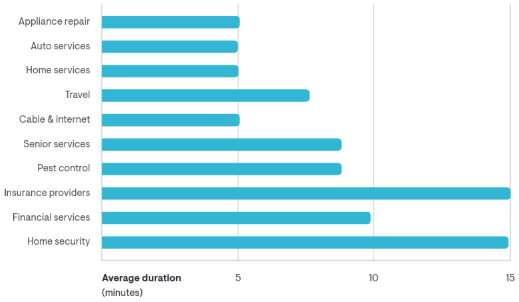
It’s important to note, though, that some businesses need a shorter duration than others to indicate call quality. Below are the average call durations by industry from CallThread’s network, to give you a benchmark for your pay-per-call campaign’s average call duration.
CallThread’s average call duration by industry
Billable Call Rate
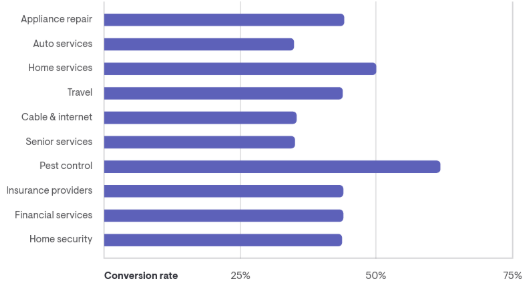
The percentage of delivered calls that meet qualification criteria (such as duration and targeting requirements) remains an important indicator of traffic alignment and source quality. This conversion rate is calculated by dividing the number of calls that meet the duration and qualification requirements by the total number of calls delivered. A high billable call rate indicates higher quality calls that advertisers predict will turn into customers.
The graph below shows you a benchmark of how many calls you can expect to convert and be billed for from your pay-per-call provider, based on your industry. The data comes from CallThread’s reporting, so you might see different results depending on your partner.
Average call conversion rate in a sample of industries
Call Intent and Conversation Quality
With access to call recordings and transcriptions, advertisers can assess intent more directly, evaluating whether calls involve genuine service inquiries, relevant questions, and meaningful dialogue rather than misdials or low-value interactions. Some modern pay-per-call platforms, such as CallThread, will also include AI-powered call scoring that dynamically scores calls to streamline the QA process.
Getting Started with Pay-Per-Call
Once you decide that pay-per-call is the right strategy for you, there are three general steps you’ll need to complete to set up a successful pay-per-call program.
Step 1 – Decide how you will receive the calls
The first question you will need to think through before setting up your pay-per-call campaign: who will answer the calls?
You need to set up the resources to answer the calls delivered to you. Call sources become frustrated if the calls they generate are sent to voicemail, especially if these calls can be sent elsewhere. Due to this concern, most pay-per-call providers specify in their agreements that unanswered calls will be billable, even if they do not reach the duration requirement.
Many of the national brands that use pay-per-call campaigns route their calls to contact centers. There are situations, however, when the call is best routed to individual stores or franchises, or a hybrid of both.
It’s also a good idea to qualify calls from the campaign with an adaptive call flow, an IVR, or an answering service before routing them to the appropriate destination.
Step 2: Decide how you will structure your campaign
This is when you decide what kinds of calls you want. These are the questions you’ll need to answer before you can set up a campaign with your provider:
- What is your budget? The answer to this question will help you determine your bid price and call pacing requirements. You’ll need to determine your overall budget for your campaign either by month or by day.
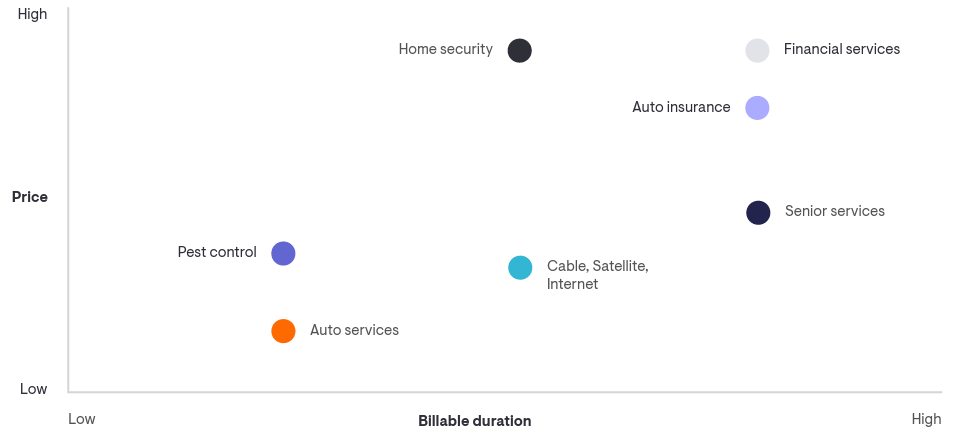
- What is your bid? To answer this question, you’ll need to determine how much you are willing to pay for each call based on your campaign budget, billable duration, and quality requirements. Your bid will also be impacted by the competition in your industry and the time of year.
You may also have the opportunity to bid dynamically based on call quality and targeting parameters, such as paying more for a call in a geo you want more customers in than a geo where you have less appetite for new customers or paying more for callers with certain qualities than ones you know less about.Ultimately, you want your bid to be competitive so that the best pay-per-call affiliates and publishers are incentivized to send their high-quality calls to your campaign. If your bid price is too low, your duration requirement is too high, or you have too many targeting parameters, you may not receive as much call volume.
When in doubt, ask your pay-per-call provider what a competitive bid in your industry should be. At CallThread, we help all our advertiser partners keep their bids competitive as market prices change with competition and seasonality.
Average bid prices by industry
- What are your campaign goals and success metrics? Determine how you will measure the success of your campaign before it starts, and communicate your goal with your provider. For example, at CallThread, we often optimize our calls based on our partners’ cost per lead (CPL) or cost per acquisition (CPA) goals.
Also, be sure you have a feedback loop set up with your provider so they can optimize based on call outcomes, instead of relying only on volume and duration metrics. - What are your hours and targeting requirements? Consider your ideal consumer and where they live (e.g. – the zip codes you service), who they are (e.g. – homeowners or insured drivers), and what problem you solve for them (e.g. – HVAC repair or termite extermination). Also consider the days that your call center or businesses are open and your ideal campaign hours.
- What kinds of calls do you want? Decide if you will allow transfers or if you want to restrict call traffic to inbound calls only. Transfers can be warm (a third-party call center has already qualified the caller and will introduce your agent to them) or cold (the third-party will qualify the caller but transfer them without an introduction). Transfers can come from inbound generation methods or outbound dials. When you first start with pay-per-call, we recommend restricting your campaign to inbound calls until you’re familiar with the compliance concerns surrounding transfers.
- How will you route and filter calls? Traditionally, pay-per-call relied on IVR menus to route calls effectively. An IVR menu is an automated front-end menu that greets new callers and is used to filter and direct the call to the proper destination, and they are still used today to filter out calls that do not meet your target consumer profile.
Your pay-per-call provider may also use AI qualification or smart routing to route and filter calls even more efficiently. - Do you have channel restrictions? If there are any channels you do not want your pay-per-call partner to use when generating calls, let them know. These may include social media ads, display ads, email marketing, and so on. Also let your provider know if you need to approve the creatives or ad copy they use.
Pay-per-call partners that use their own affiliate network will often manage the creative approval process for you based on your requirements. - Will you allow call recordings, transcriptions, and call scoring? Many pay-per-call providers use call recordings to optimize their call quality and will give their advertisers access to these call recordings as needed. However, if you are in an industry that has concerns about HIPAA or other privacy laws, you can ask your provider to disable call recordings for your campaign. Just remember that call recordings and transcriptions can enable AI-powered call scoring, which is important for optimizing your campaign and ensuring your quality remains good.
Will you require a dedupe period? Deduping is a process that providers use to ensure advertisers are not charged for multiple calls from the same caller in a set period of time. The dedupe period is typically set for a rolling 30 days but can be less based on the type of service and the ad that is being used to attract the consumer.
Step 3: Choose a pay-per-call partner
To scale effectively, most advertisers choose to work with an established pay-per-call network or performance partner rather than managing multiple publishers independently. A well-structured network provides access to diversified traffic sources while centralizing quality control, compliance oversight, and performance optimization.
“When looking for a pay-per-call partner, quality management and transparency should be at the top of your list. Having a dedicated account manager overlooking your account ensures continued success through improved call quality and scaling your business profitably.” - Makensie Crawford, Soleo Director of Performance Management
In today’s environment, the right partner operates as performance infrastructure, using real-time routing logic, intent validation, and data-driven optimization to ensure that inbound calls align with your campaign goals.
When a call meets your targeting and qualification criteria, the network seamlessly routes the live call to your business. More importantly, modern networks continuously refine traffic quality using call analytics, performance feedback, and compliance monitoring to improve results over time.
Working with an experienced partner gives you access to broader reach while maintaining visibility, control, and accountability across your campaigns.
When choosing a pay-per-call partner, look for the following considerations:
- Outcome-Focused Optimization
Look for a partner that optimizes beyond call duration. They should support post-call conversion tracking and use performance data to improve lead quality over time. - Transparent Traffic Sources
Your partner should provide visibility into where calls originate and maintain rigorous publisher vetting standards. - Advanced Compliance Controls
Ensure they have strong consent verification processes, brand disclosure safeguards, call recording governance, and active monitoring of traffic sources. At the end of the day, compliance should be embedded in their operations, not treated as an afterthought. - Real-Time Reporting and Call Analytics
Access to live dashboards, call recordings, transcriptions, and performance insights is essential for campaign management. - Scalable and Reliable Volume
Your partner should be able to scale call volume responsibly without sacrificing quality or overwhelming your internal teams. - Operational Support and Strategic Guidance
The best partners act collaboratively and should help refine targeting, pacing, and campaign structure based on ongoing results. - Proven Experience in Your Vertical
Industry familiarity improves targeting precision, compliance alignment, and performance forecasting. - Strong Industry Reputation
Choose a partner known for transparency, reliability, and long-term relationships.
How to manage your campaign
As a general rule, national pay-per-call campaigns require a structured ramp-up period to align traffic quality with your cost-per-acquisition (CPA) or revenue goals. During the first 60–90 days, your campaign should be treated as an optimization phase where targeting, routing logic, and traffic sources are refined based on performance data.
In the early weeks, call volume may start conservatively as your partner configures targeting parameters, validates traffic sources, and aligns pacing with your operational capacity. This period is critical for analyzing call quality, monitoring compliance, and incorporating early conversion feedback to improve performance.
Evaluating your call sources
Once your campaign is live, ensure you have access to the metrics necessary to evaluate true performance. Work with your account manager to assess call sources, channels, and geographies not just on volume—but on business impact.
Evaluate traffic sources based on:
- Conversion rate and cost per acquisition
- Revenue per call (if available)
- Reliability and pacing stability
- Compliance adherence
- Operational compatibility (speed-to-answer, abandonment rates)
Allocate budget strategically toward sources that deliver sustainable performance—not just higher volume.
Compliance
Compliance management should be continuous – not reactive. In addition to monitoring for fraudulent or misaligned calls, modern campaigns require source-level transparency, consent verification processes, and ongoing publisher vetting.
Ensure your partner actively monitors:
- Brand disclosure accuracy
- Traffic source integrity
- Incentivized or misleading placements
- AI-generated content risks
- Call recording governance and audit trails
Strong compliance controls protect both your brand reputation and long-term campaign viability.
If you work with a network, they will be monitoring their call sources for compliance. For example, at CallThread, our dedicated customer success managers rigorously vet our call sources and closely monitor their calls using call recordings and transcriptions to ensure we deliver compliant traffic to our partners.
Conversions
How many of the calls convert?
Measure both pay-per-call qualification metrics (such as billable rate) and downstream performance metrics (such as sales conversion rate, CPA, and return on ad spend). Calls that meet duration thresholds are only the starting point; true performance is defined by what happens after the call connects.
Share consistent post-call conversion data with your partner. CRM integrations, disposition tagging, and revenue reporting enable more precise optimization and faster performance improvements.
Managing your partner
The best way to manage your pay-per-call partner is to choose a provider that you can easily communicate with and you feel is able to address all of your needs as they arise. Consistent, two-way communication and transparency are crucial to the success of your pay-per-call partnership.
Even with the most compliant partners, there is a chance that some unqualified calls slip through the cracks and into your call centers. Be sure you understand the kinds of calls you are entitled to a refund for, if any. For example, CallThread allows our advertisers to receive credits for fraudulent calls, misdials, duplicates within the dedupe period, and other similar circumstances. Monitor your calls and file disputes as necessary.
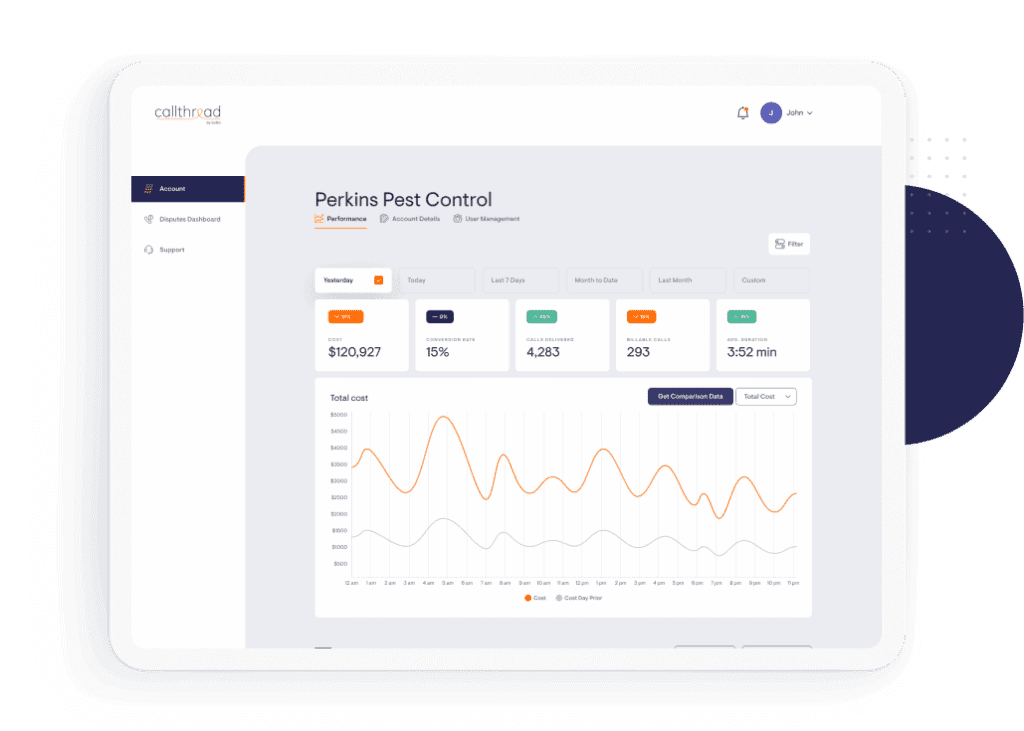
Be sure your partner provides you with consistent reporting that is easily accessible to you and meets your reporting needs. CallThread offers real-time reporting dashboards and access into detailed call-by-call records to meet these concerns.
Why CallThread
CallThread is Soleo’s proprietary performance marketing platform, combining advanced call routing, real-time analytics, and compliance infrastructure with an expansive, thoroughly vetted pay-per-call network.
By integrating call tracking, call source management, and performance insights into a single system, CallThread enables advertisers to optimize toward measurable business outcomes.
Our focus is simple: align inbound demand with revenue performance, protect brand integrity, and scale responsibly.